GLP-1 and PCOS: Can Semaglutide Help with Symptoms?
What Is PCOS and Why Does Weight Matter?
Polycystic ovary syndrome (PCOS) affects approximately 8–13% of reproductive-age women, making it one of the most common hormonal disorders worldwide.
(Source: World Health Organization. Polycystic ovary syndrome. who.int/news-room/fact-sheets)
A central feature: 65–80% of women with PCOS have some degree of insulin resistance. High insulin drives androgen production from the ovaries, which worsens virtually every PCOS symptom — irregular periods, acne, hair thinning, and difficulty losing weight.
How GLP-1 Medications Work for PCOS
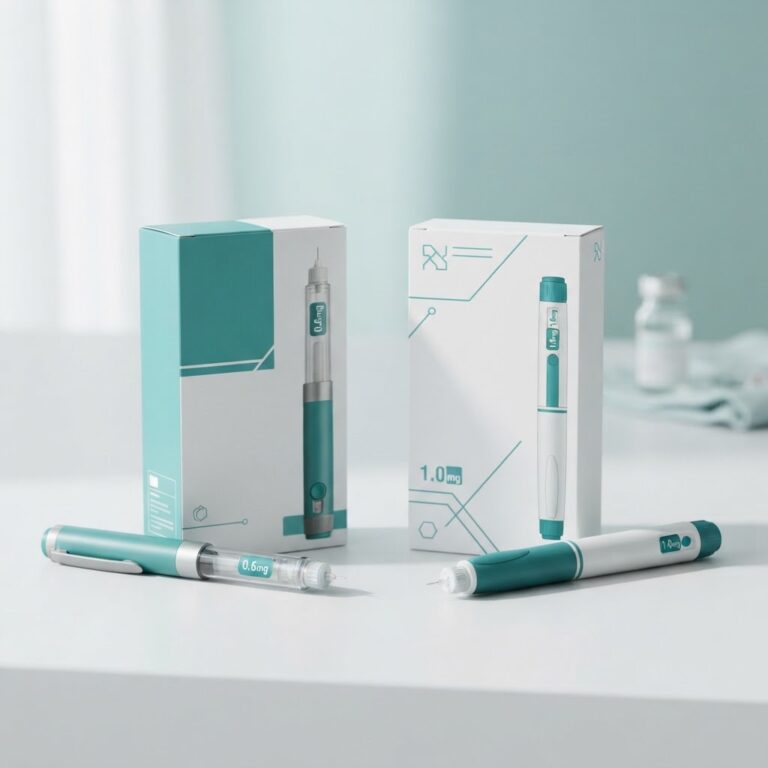
GLP-1 receptor agonists are not FDA-approved specifically for PCOS. But they address the underlying mechanisms:
1. Improving insulin sensitivity
GLP-1 medications reduce chronic hyperinsulinemia — which in turn lowers androgen production from the ovaries.
2. Promoting weight loss
Even a 5–10% reduction in body weight can significantly improve PCOS symptoms, including restoration of ovulation. GLP-1 medications make this loss more achievable for women who struggle metabolically.
3. Anti-inflammatory effects
GLP-1 medications show anti-inflammatory properties that may benefit the chronic low-grade inflammation associated with PCOS.
What the Research Actually Shows
Key published findings:
- A 2023 study (PMC10531549) found that semaglutide at low doses significantly reduced body weight in approximately 80% of obese PCOS patients unresponsive to prior lifestyle modification
- A 2025 study (PMC12297736) found that combined metformin + semaglutide outperformed metformin alone on BMI, androgen levels, and insulin resistance markers in PCOS patients
- Multiple smaller studies report measurable reductions in testosterone levels and improvements in menstrual regularity with GLP-1 therapy in PCOS
Important caveat: Most existing evidence comes from small studies and case series. A large randomized controlled trial of semaglutide specifically for PCOS has not yet been published. GLP-1 medications are used off-label for PCOS based on metabolic and weight criteria.
The Fertility Warning: Critical Information
As GLP-1 medications improve insulin sensitivity and restore ovulation in women with PCOS, pregnancy can occur in women who previously assumed they could not conceive.
If you are on a GLP-1 medication and sexually active, use reliable contraception unless you are actively trying to conceive.
Additionally: GLP-1 medications should be discontinued before pregnancy — ideally 2 months before attempting to conceive. They are not studied for safety during pregnancy and are not considered appropriate for use while pregnant.
Metformin vs GLP-1 for PCOS
| Metformin | Semaglutide (GLP-1) | |
|---|---|---|
| Weight loss | Modest (~1–2 kg average) | Significant (mean 14.9% in STEP 1) |
| Insulin resistance | Improves | Improves significantly |
| Androgen reduction | Modest | Significant in studies |
| GI side effects | Common early | Common early |
| Cost | Very low ($4–10/month generic) | High ($1,000+/month brand) |
| PCOS-specific evidence | Decades of data | Emerging — promising but limited |
Many endocrinologists now use both together for women with PCOS, particularly those with significant insulin resistance and weight-related barriers.
Who Should Ask Their Doctor About GLP-1 for PCOS?
- PCOS with documented insulin resistance
- PCOS with BMI ≥ 27 and a weight-related comorbidity, or BMI ≥ 30
- PCOS where metformin alone has not produced adequate results
- PCOS with significant weight-driven symptom burden
The Bottom Line
GLP-1 medications show meaningful promise for PCOS — particularly for women with insulin resistance and obesity as driving factors. The evidence is early but consistent: weight loss and improved insulin sensitivity translate to reduced androgen levels and better metabolic outcomes. If you have PCOS, ask your provider whether you meet criteria for GLP-1 therapy based on your weight and metabolic profile.
Sources & further reading
- Teede HJ, et al. Recommendations from the 2023 International Evidence-based Guideline for the Assessment and Management of PCOS. J Clin Endocrinol Metab, 2023.
- Novo Nordisk — Wegovy Prescribing Information
Medical Disclaimer: This article is for informational and educational purposes only. It does not constitute medical advice. Always consult a qualified healthcare provider before starting, stopping, or changing any medication or treatment.
📥 Doctor Visit Prep Kit
50+ questions to ask your doctor, dosing tracker, lab guide, and side effect log — walk in prepared every time.
Get the weekly GLP-1 update
Price drops, insurance and Medicare changes, and new research, in one short email a week. Free. Unsubscribe anytime.
We never share your email. See our privacy policy.